Op. Dr. İlhan Serdaroğlu
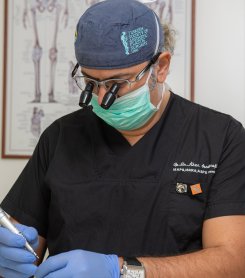
I have been serving patients for over 25 years.
I graduated with honors from Marmara University Faculty of Medicine and completed my specialization in Plastic and Reconstructive Surgery at Akdeniz University. I believe that surgical experience, the selection of the right technique, and personalized planning are crucial in hair restoration. A natural, anatomically appropriate hairline design and a tissue-respecting surgical approach that reduces the risk of complications are essential in hair transplantation. While aiming to reduce the psychological effects of hair loss in both men and women, I also strive to apply medical and scientific supportive treatments and share my experiences globally.
HAIR TRANSFORMATION STARTS HERE.
You can plan your hair transplant process specifically for you by having an online consultation with Op. Dr. İlhan Serdaroğlu.
Contact us via WhatsApp, form, or phone.
Our expert team will provide preliminary information and schedule your appointment.
Plan your hair transplant with Op. Dr. İlhan Serdaroğlu.
OUR TREATMENT PROCESSES
Our patient processes at our clinic

Let us Call You
What is exosome therapy?
It is a new form of regenerative therapy; it facilitates processes such as tissue repair, inflammation regulation, and skin renewal. Exosomes have been shown to activate intercellular interactions and certain cell-stimulating signaling pathways: Exosomes can stimulate the activation and proliferation of hair follicle stem cells, initiating the anagen (growth) phase in the hair cycle. Therefore, exosomes can be injected into the scalp to reduce hair loss and strengthen hair follicles. They are ideal for delivering targeted treatments efficiently, promoting skin renewal, increasing elasticity, and providing anti-aging effects.
What are the systemic effects and functions of exosomes?
Exosomes have regenerative, anti-inflammatory, and angiogenic (vascular formation-inducing) properties. Exosome therapy can be used to improve scar tissue by regenerating the cells to which they are applied. They are used in the treatment of skin pigment disorders and melasma through melanocyte regulation; and in skin rejuvenation/anti-aging applications.
Exosomes trigger many functions in the cells they reach, such as differentiation, proliferation, motility, and the formation of vascular structures. Therefore, they hold great promise in anti-aging dermatological applications.
Exosomes have biological functions because they facilitate intercellular communication; therapeutic/healing effects because they can be used in the treatment of tissue damage; pharmacological efficacy because they have the potential to carry new drug molecules; and biomarkers for use in the diagnosis of diseases.
Many functions of exosomes have been identified:
- Intercellular signaling and communication,
- Tissue regeneration,
- Regulation of the immune system and anti-inflammatory effect,
- Maintaining cellular homeostasis,
- Transport of genetic material,
- Wound healing related to mRNA coding and protein production; scar tissue healing,
- Regenerative medicine applications,
- Use for diagnostic purposes in diseases,
- Genetic programming,
- Drug and gene delivery (even new generation vaccines can be made using exosomes).
- Exosomes are particularly effective in cosmetic applications due to their ability to penetrate deep into the skin.
Where are exosomes obtained from?
Exosomes can be obtained from umbilical cord connective tissue cells, placenta, fat-derived stem cell cultures, skin fibroblast cells, platelet cells (clotting cells that we also use in PRP production), bone marrow stem cells, and keratinocyte cells. After these different types of cells are multiplied in culture media, the exosomes released into the medium are collected and, after being centrifuged at very high speeds, billions of them can be used for cosmetic purposes.
What are the non-human sources of exosomes?
Apart from human cells, exosomes can be obtained from plant-derived (fruit, pollen, seeds), animal-derived (mollusks, ticks, milk, eggs, honey, amphibian species, silkworms, and animal venoms), and microbial-derived (parasites, bacteria, and fungal) sources.
What is Exosome Therapy for Hair?
Exosome therapy for hair is a new non-surgical treatment.
Studies to date have shown that exosomes help prevent hair loss by regenerating hair follicles and promoting hair regrowth. However, this treatment is not yet standardized, but it is one of the most promising hair treatments. For example, exosomes derived from dermal papilla cells have been shown to trigger the Wnt/β-catenin pathway in hair follicle sheath cells, leading to the telogen-anagen transition in mouse hair follicles. In other words, exosomes have been shown to trigger the growth phase in hair follicles, resulting in thickening and vitality of the hair follicles.
How Does Exosome Therapy Work?
Exosomes help regenerate weakened or dysfunctional hair follicles. Exosomes activate stem cells by facilitating signal exchange between cells and the scalp. They release growth factors, cytokines, and other molecules that help rejuvenate hair follicles, promoting hair regrowth. In a clinical study, when exosomes purified from fat-derived stem cells were applied topically with a microneedle roller (dermaroller), significant improvements in hair density (146.6 hairs/cm2 vs. 121.7 hairs/cm2) and hair thickness (61.4 μm vs. 52.6 μm) were observed.
Can Exosomes Help in Alopecia Treatments?
Yes, especially in autoimmune alopecia areasta, exosomes appear to be effective in treating alopecia. In some primary cicatricial alopecias, such as lichen planoplaris, frontal fibrosing alopecia, central centrifugal cicatricial alopecia, pseudopelade, chronic cutaneous lupus erythematosus, follicular decalvans, tufted folliculitis, dissecting cellulitis, and keloidal folliculitis, the body's immune system attacks hair follicles for an unknown reason, resulting in permanent hair loss.
Some studies suggest that exosomes may have anti-inflammatory effects. Therefore, exosomes could be quite beneficial in the treatment of autoimmune cicatricial alopecias that cause hair loss. However, it is still being tested, and exosome therapy is not yet accepted as a standard treatment method for primary cicatricial alopecias.
Does exosome therapy regrow hair?
One day, when exosome therapy is fully standardized and, in a sense, perfected, it may be beneficial in revitalizing and renewing miniaturized hair follicles that we consider dead but are actually dormant in a thin, downy state. It may be possible to rejuvenate aging scalp and aging hair follicles with exosome therapy.
Is Exosome Therapy Safe?
Yes, it is quite safe, and there are no reported serious side effects of exosome therapy. Exosome applications are considered safe in the hands of an experienced physician.
In a scientific study, the safety of subcutaneous (under the skin) exosome injections was evaluated in a case series of 31 patients with androgenetic alopecia (genetic hair loss). Exosome injections were administered to the scalp of the patients. During follow-up, no adverse reactions such as fever, muscle pain (myalgia), chills, fatigue, or scalp infection were reported.
In cell culture systems, adherence to Good Manufacturing Practices (GMP) is crucial to minimize the risk of microbial contamination, which in turn enhances exosome safety.
In another recent safety study, exosomes were isolated from human-derived pluripotent stem cells. No evidence of hemolysis, DNA damage, or cytolytic effects was observed, particularly in the liver, kidneys, brain, and lungs; no abnormal histological findings were seen. However, further studies are needed to fully define the molecular and functional properties of exosomes from different sources (plant, animal, etc.) and to establish safety limits.
Is Exosome Therapy FDA Approved?
No, exosome therapy is not FDA approved. It is still a treatment under investigation and therefore has not yet been approved by the FDA. In the United States, exosomes used in human treatments are classified as "biological products."
Is the effect of exosome treatment for hair permanent? After a therapy session, it's not precisely known how long the effects of exosomes injected into your scalp will last. The results may be permanent or temporary. However, a better understanding can only be obtained through long-term, double-blind controlled clinical trials with sufficient patient groups.
How Many Sessions Are Needed for Exosome Therapy?
There is no established standard number of sessions or protocol for exosome therapy. However, 3 to 5 sessions may be necessary to maximize effectiveness. Generally, the treatment plan is determined by the doctor based on the patient's needs and the severity of hair loss.
How Long Does Exosome Therapy Take?
Each session can last approximately 10-15 minutes. Several sessions are usually scheduled 2 to 4 weeks apart.
Does Exosome Therapy Hurt?
No, exosome hair therapy is not a painful procedure, but as with mesotherapy, patients may feel a slight needle sting similar to hair pulling on the scalp during injection. For patients with a low pain threshold or those who are very sensitive to pain, local anesthetics can be applied before the procedure to ensure a painless application.
How Much Does Exosome Therapy Cost?
Exosome hair therapy costs between $1,000 and $3,000. These prices may vary depending on the number of sessions the patient needs and where the treatment is performed.
Exosome hair restoration treatment is quite new, and therefore the price range is quite wide. The price mostly depends on the clinic's location, whether the practitioner is a doctor, and also the number of requests.
Do Insurance Companies Cover Exosome Therapy?
No, insurance companies do not cover exosome therapy.
What are the Pros and Cons of Exosome Therapy?
Pros of Exosome Therapy:
- It has an anti-inflammatory effect and helps reduce inflammation.
- It can be used in the treatment of scars and pigmentation by aiding tissue regeneration.
- There is no recovery time, pain, or discomfort after application.
Cons of Exosome Therapy:
- It is an expensive procedure.
- The certainty of the treatment has not been fully established; it is still an experimental treatment method.
- Multiple sessions may be required.
- There is a risk of contamination and infection during production if GMP (Good Manufacturing Practices) conditions are not observed. If good manufacturing conditions are not ensured, they can spread diseases, trigger cancer cell formation, and help cancer spread. They also have the chance of disrupting the immune system.
- It does not yet have FDA approval.