Op. Dr. İlhan Serdaroğlu
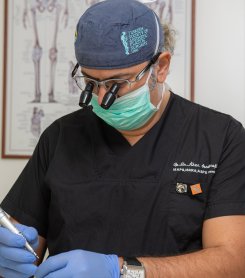
I have been serving patients for over 25 years.
I graduated with honors from Marmara University Faculty of Medicine and completed my specialization in Plastic and Reconstructive Surgery at Akdeniz University. I believe that surgical experience, the selection of the right technique, and personalized planning are crucial in hair restoration. A natural, anatomically appropriate hairline design and a tissue-respecting surgical approach that reduces the risk of complications are essential in hair transplantation. While aiming to reduce the psychological effects of hair loss in both men and women, I also strive to apply medical and scientific supportive treatments and share my experiences globally.
HAIR TRANSFORMATION STARTS HERE.
You can plan your hair transplant process specifically for you by having an online consultation with Op. Dr. İlhan Serdaroğlu.
Contact us via WhatsApp, form, or phone.
Our expert team will provide preliminary information and schedule your appointment.
Plan your hair transplant with Op. Dr. İlhan Serdaroğlu.
OUR TREATMENT PROCESSES
Our patient processes at our clinic

Let us Call You
What are stem cells? How do they differ from autologous micrografts?
Stem cells are special cells found in our own bodies that have the capacity to transform into different cells. Stem cells can make a copy of themselves; they can transform into cells within the tissue they are in and repair damage; they can create a different cell; or they can go to areas in the body where repair is needed and initiate repair. Stem cells in adults are unspecialized and are found on blood vessels, in the matrix of adipose tissue, and among cells in tissues and organs. The most important role of adult stem cells is to maintain the life of the tissue they are in and to repair the tissue when it is injured.
Adult stem cells are found in various body tissues of humans (such as fat, blood, muscle, hair follicles, bone marrow). In embryonic life, stem cells form all body tissues.
In adult humans, stem cells mainly function as the body's repair mechanism, ensuring the renewal and repair of tissues. Therefore, adult stem cells are used in the field we call regenerative medicine: Autologous stem cells have begun to be used to repair organ and tissue functions after deterioration, loss of function, and weakening due to injury, aging, tissue death, or chronic diseases. These adult autologous stem cells used in treatment can be described as super cells that reach damaged areas and have the power to heal and repair these tissues.
Autologous micrografts, on the other hand, are a smaller number of autologous skin stem cells taken along with the skin, used in G cell regenera treatment. Since a much smaller number of hair follicles are used here, the number of autologous stem cells obtained will also be small.
Who can receive Autologous Follicular Stem Cell Hair Treatment?
Autologous stem cell hair transplantation has no side effects because the person's own cells are used and do not create antigenicity.
Stem cell treatment can be applied alone or during hair transplantation to support the procedure. There are significant advantages to performing autologous stem cell treatment during hair transplantation, i.e., autologous stem cell hair transplantation.
In addition, follicular autologous stem cell therapy can be applied to male or female patients of all ages who experience thinning hair due to genetic hair loss. Stem cell therapy is not only preferred by people with baldness, but also by those with weak hair who want to have thicker hair. Furthermore, autologous stem cell therapy can be used to support damaged hair that has been frequently exposed to cosmetic treatments, dyes, or hairdressing. This is because such hairdressing services chemically and physically affect hair follicles, leading to lifelessness and dullness.
How many sessions are needed for Autologous Follicular Stem Cell Hair Treatment?
Autologous stem cell hair treatment is applied in a single session, but if necessary, it can be repeated annually, similar to autologous micrograft applications, to stop hair thinning and support the process of preventing hair loss.
Where and how are Autologous Follicular Stem Cells obtained?
Autologous stem cells are obtained from the person's own tissues, and for this purpose, tissue samples such as fat, bone marrow, umbilical cord, blood tissue, and hair follicles are most commonly used. It is possible to use autologous stem cells from the scalp to repair and regenerate hair and to stop miniaturization due to androgenetic alopecia. For this purpose, the person's own cells, i.e., "autologous" stem cells, are used: 150-200 grafts or hair follicles taken from the hairs on the nape and above the ears, which are genetically coded not to fall out, under local anesthesia during a hair transplant operation are sufficient to obtain autologous stem cells. In other words, the stem cell suspension is prepared entirely from the patient's own tissue. At the base of hair follicles are autologous stem cells that both form hair strands and regenerate skin tissue in case of skin injury, enabling epithelialization and repair. These autologous stem cells are extracted from hair follicles through special enzymatic processes and become ready for use in approximately 2 hours. Stem cells can also be obtained from adipose tissue for hair transplantation, but this is a longer and more laborious process.
Autologous stem cell hair transplantation can also be performed using stem cells obtained from adipose tissue. In this treatment, adipose tissue taken from areas such as the abdomen, thighs, or inner thighs is processed in the same or a different session as the hair transplant. However, since these procedures are painful, the patient must be put under general or deep sedation anesthesia during the fat harvesting process.
Another autologous stem cell hair transplantation method involves processing tissue samples obtained from bone marrow, fat, or hair follicles in GMP laboratories to multiply autologous stem cells and obtain nearly 100% pure stem cells within 3-4 weeks. These autologous stem cells are injected into the scalp in 3 sessions with 2-3 week intervals, thus performing an autologous stem cell transplant. The most significant disadvantages of autologous stem cell hair transplantation from adipose tissue are its high cost and the long waiting period for treatment.
How is Autologous Follicular Stem Cell Treatment applied?
During hair transplantation surgery, while the hairs are being transplanted, autologous stem cells obtained from the hair follicles through a chemical and physical separation process lasting approximately 2 hours are injected into the scalp along with PRP. PRP stands for "platelet-rich plasma." Growth factors and various factors that repair damaged tissues found in platelets also stimulate the existing hair follicles that are miniaturizing and beginning to fall out, revitalizing them. This supports the autologous stem cell hair transplantation process.
How do autologous follicular stem cells affect hair?
In cases of genetic baldness or androgenetic alopecia, hair follicles transition from the growth (anagen) phase to the resting phase; they don't grow, they don't lengthen, and they begin to miniaturize. In other words, under the influence of testosterone, they enter the shedding phase instead of the growth phase, and over time, the hair follicles shrink completely, becoming thin and delicate, leading to baldness.
Transplanting autologous stem cells into the scalp supports the healing of weakened, miniaturized hair follicles; it stimulates the hair follicle, allowing it to return to the anagen phase. Autologous stem cell transplantation supports hair follicles and accelerates hair growth. As a result, autologous follicular stem cells enable the recipient to have thicker, more vibrant, fuller, and healthier hair.
Is autologous follicular stem cell therapy an alternative to hair transplantation?
No, it is only an auxiliary treatment method. Especially in young male patients experiencing hair loss and severe hair thinning, autologous follicular stem cell therapy can slow down and reduce hair loss during the waiting period for hair transplantation. Furthermore, autologous stem cell transplantation during the hair transplant procedure ensures both faster healing and stronger hair growth in the transplanted hair.
What is the Price of Autologous Follicular Stem Cell Hair Transplantation?
Autologous stem cell transplantation, performed during hair transplantation or as support for thinning hair, is more expensive than PRP sessions, but the advantage is that it is done in a single session. If the patient's own hair follicles are used for autologous stem cell hair transplantation, the cost becomes more affordable. If the patient's autologous fat tissue is used in autologous stem cell hair transplantation, the additional cost of obtaining the fat tissue is also borne by the patient.