PRP Treatment
In recent years, PRP (Platelet Rich Plasma) has become one of the most frequently used treatments for hair loss, both in Turkey and worldwide. Our patients frequently ask us questions about this method and, understandably, seek information regarding its effectiveness. This technique uses the patient's own blood; just one or a few tubes of blood are taken and processed within minutes in special tubes using specific procedures.
Online Consultation
This is performed by our plastic surgeon.
Analysis & Planning
A personalized treatment plan is created in collaboration with our doctor.
Suitability
Our doctor will assess your suitability for the procedure.
Op. Dr. İlhan Serdaroğlu
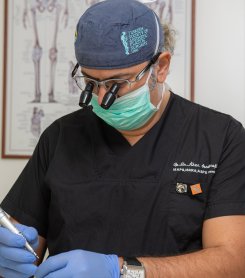
I have been serving patients for over 25 years.
I graduated with honors from Marmara University Faculty of Medicine and completed my specialization in Plastic and Reconstructive Surgery at Akdeniz University. I believe that surgical experience, the selection of the right technique, and personalized planning are crucial in hair restoration. A natural, anatomically appropriate hairline design and a tissue-respecting surgical approach that reduces the risk of complications are essential in hair transplantation. While aiming to reduce the psychological effects of hair loss in both men and women, I also strive to apply medical and scientific supportive treatments and share my experiences globally.
HAIR TRANSFORMATION STARTS HERE.
You can plan your hair transplant process specifically for you by having an online consultation with Op. Dr. İlhan Serdaroğlu.
Contact us via WhatsApp, form, or phone.
Our expert team will provide preliminary information and schedule your appointment.
Plan your hair transplant with Op. Dr. İlhan Serdaroğlu.
OUR TREATMENT PROCESSES
Our patient processes at our clinic

Let us Call You
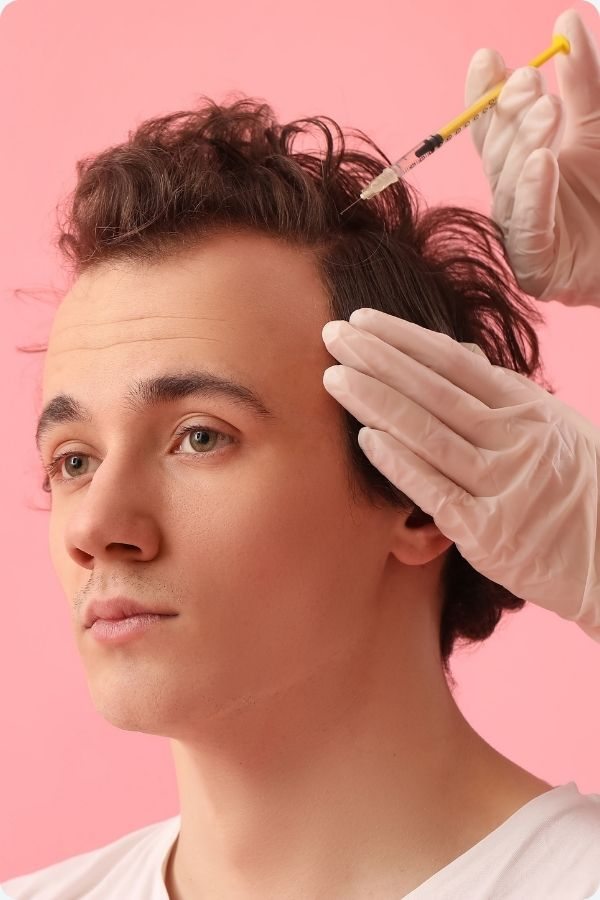
The procedure takes approximately 15 minutes and, because it is obtained from the patient's own blood in a closed system, there is no risk of complications such as disease transmission or allergic reactions. The aim here is to obtain platelets at approximately 2-4 times their normal blood concentration and to deliver them in a concentrated form to the desired target tissue. Platelets, or thrombocytes, are cells that release growth factors and many other wound-healing factors into the environment when there is an injury in the body; they go to the injured area, repair the damage, and heal the tissue. In other words, platelets are the cells that initiate and stimulate repair in damaged tissue. When PRP treatment is applied to the hair transplant area and these cells are injected in high concentrations, healing accelerates and blood flow increases in the transplanted area. The survival rate of the grafts increases, and more efficient results can be obtained.
Furthermore, in applications to weakened hair follicles, it has been observed that the hair strands become revitalized, thickened, and fuller. The growth and repair factors in platelets also have a stimulating effect on miniaturized hair follicles, enabling them to revive.
The PRP preparation process has not yet become a global standard. Different specialists use different PRP kits/tubes, yielding varying concentrations of platelets. For platelets, which are blood cells, to be effective and release growth factors to exert their revitalizing effect, they need to be activated. There is still no global consensus on this activation process.
The frequency and number of PRP sessions are also somewhat unclear; however, current global authorities recommend PRP treatment every 3-9 months, with at least 2-3 sessions each time, to halt hair weakening.
There are also universally accepted facts about PRP: It is effective in both male and female patients who have not yet experienced complete hair loss/baldness but are only in the thinning phase. Approximately 70-90% of patients experience a slight increase in hair thickness and revitalization, while around 20% do not achieve the expected results. Overall, the high satisfaction rate is pleasing to us surgeons. Improved hair quality typically begins to be seen 2-6 months after PRP treatments, and this effect can be maintained as long as the treatment is continued and supportive applications are performed.
In PRP treatments, the release of growth factors by platelets stimulates the development and growth of dermal papilla hair cells that produce hair. It also induces regional blood flow, nourishing and revitalizing hair follicles and positively impacting hair growth.
Today, PRP treatment is one of our important tools for strengthening thinning and falling hair. It offers hope, especially for those who do not want to undergo medical treatment, i.e., those who do not want to use daily sprays or tablets. We also strongly recommend PRP to patients who are continuing medical treatment and want additional supportive therapy, or to those who have undergone medical treatment for a long time without success. We recommend PRP to young patients whose hair loss begins at a very young age and for whom we believe it is too early for hair transplantation. In addition, we have patients who quickly become bored with their medical treatment and inform us that they cannot continue their treatment properly; for these individuals, applying PRP treatment makes sense.
One important point to remember is that there is currently no standard for PRP treatments, neither regarding platelet concentration, preparation, nor the method/number of sessions. Until a standard is established and implemented worldwide, it is crucial for patients to remain vigilant and avoid PRP treatments prepared with very cheap and low-quality materials to reduce costs. Although it is an accepted practice by authorities in the field, research and scientific clinical trials/articles on PRP treatments are still very limited and insufficient worldwide.