What is mastopexy surgery?
Over time, breasts sag and loosen due to factors such as childbirth, breastfeeding, gravity, and frequent weight fluctuations. Mastopexy is the procedure of lifting, firming, and tightening these sagging breasts.

Online Consultation
This is performed by our plastic surgeon.
Analysis & Planning
A personalized treatment plan is created in collaboration with our doctor.
Suitability
Our doctor will assess your suitability for the procedure.
Op. Dr. İlhan Serdaroğlu
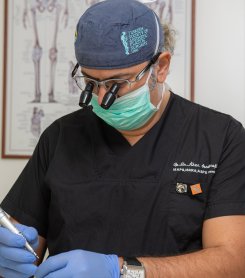
I have been serving patients for over 25 years.
I graduated with honors from Marmara University Faculty of Medicine and completed my specialization in Plastic and Reconstructive Surgery at Akdeniz University. I believe that surgical experience, the selection of the right technique, and personalized planning are crucial in hair restoration. A natural, anatomically appropriate hairline design and a tissue-respecting surgical approach that reduces the risk of complications are essential in hair transplantation. While aiming to reduce the psychological effects of hair loss in both men and women, I also strive to apply medical and scientific supportive treatments and share my experiences globally.
HAIR TRANSFORMATION STARTS HERE.
You can plan your hair transplant process specifically for you by having an online consultation with Op. Dr. İlhan Serdaroğlu.
Contact us via WhatsApp, form, or phone.
Our expert team will provide preliminary information and schedule your appointment.
Plan your hair transplant with Op. Dr. İlhan Serdaroğlu.
OUR TREATMENT PROCESSES
Our patient processes at our clinic

Let us Call You
How is the decision made for a mastopexy operation?
The surgeon makes this decision based on their experience, the patient’s expectations, the quality and degree of sagging of the breast skin, and the current volume/mass of the breast. In cases of true ptosis (sagging), the nipple is located below the inframammary fold. In such cases, the surgeon decides whether to remove breast tissue, meaning reducing the breast, or to reshape the breast without removing tissue. In some situations, the breast may be so deflated and reduced in volume that after lifting it may result in a small, conical-shaped breast, which the patient may not desire. In such cases, in order not only to reshape and lift the breast but also to achieve the desired volume and form, the use of a silicone implant during the mastopexy procedure may be necessary.
Is mammography necessary before the operation?
Before the operation, as in all aesthetic breast surgeries, it is appropriate to perform a mammography examination to evaluate the breasts.
What procedures are performed during the operation?
The operation takes approximately 2–4 hours. In mastopexy procedures, excess skin is removed, the nipple is repositioned upward, and the breast tissue is reshaped to make the breast firmer and more lifted. If necessary, the nipple may also be reduced in size. However, a breast lift alone may not always provide the desired breast shape and form. In order for the breast to appear fuller and more lifted, a silicone implant of appropriate shape, size, and projection may be placed under the breast during the same procedure. In some cases, the opposite may occur; if the breast is very large, even if only a lift is desired, it may be necessary to remove some breast tissue to achieve a healthy and effective result. All of these procedures are performed under general anesthesia in a hospital setting.
What are the scars like after the operation?
As in breast reduction surgery, the inverted T incision is generally used in this procedure as well. In addition, the operation may also be performed through an incision around the nipple only, or with a vertical incision extending downward from the nipple. In all techniques, a faint scar remains between the darker nipple area and the surrounding lighter skin tissue. The scars usually remain as a red line for several months and then gradually fade and take on the normal skin color.
What is the recovery period like after the operation?
After the operation, there is usually no significant pain. Sports bras worn for support should be used 24 hours a day for the first 6 weeks, and then only during the daytime until the end of the 6th month. These support bras and elastic bandages play an important role in maintaining the new shape of the breast.
What are the possible complications of mastopexy surgery?
As with breast reduction surgery, although rare, complications such as infection, delayed wound healing, opening of the sutures, blood accumulation in the breast tissue (hematoma), fluid accumulation (seroma), and thromboembolism may occur after this procedure. These complications are more common in overweight patients who smoke or have a sedentary lifestyle. Therefore, smoking should be stopped at least two weeks before the operation. In addition to swelling and bruising of the breast, temporary numbness of the nipple may rarely occur. The return of sensation may take about 4–6 weeks. These operations do not harm the breastfeeding function of the breast.
When can normal life be resumed after the operation?
Patients can usually stand up about 6 hours after the operation. Returning to non-strenuous work may take about one week, while returning to a normal daily routine may take around two weeks. Excessive arm movements and bending down should be avoided for about two weeks. Heavy sports activities can usually be resumed after 10–12 weeks.
Is the breast shape obtained after mastopexy permanent?
The result of this procedure is long-lasting. However, due to weight changes, pregnancy, breastfeeding, gravity, and other factors, the breast may sag again over time and its form may change.