What is Aesthetic Nose Surgery?
This is a procedure to reshape the nose in order to improve its appearance. During the same operation, anatomical structures inside the nose that obstruct the airway and hinder breathing can also be corrected.
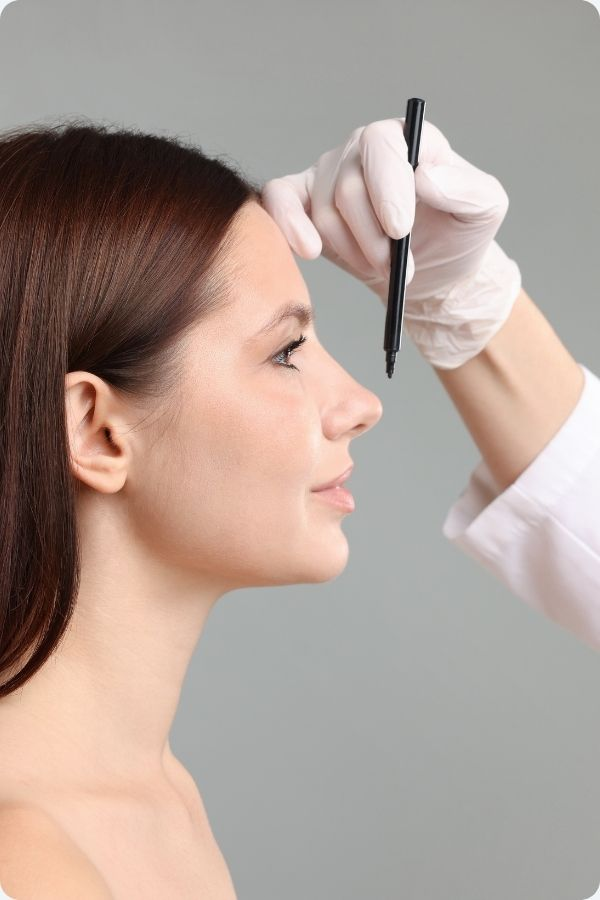
Online Consultation
This is performed by our plastic surgeon.
Analysis & Planning
A personalized treatment plan is created in collaboration with our doctor.
Suitability
Our doctor will assess your suitability for the procedure.
Op. Dr. İlhan Serdaroğlu
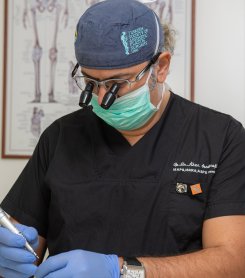
I have been serving patients for over 25 years.
I graduated with honors from Marmara University Faculty of Medicine and completed my specialization in Plastic and Reconstructive Surgery at Akdeniz University. I believe that surgical experience, the selection of the right technique, and personalized planning are crucial in hair restoration. A natural, anatomically appropriate hairline design and a tissue-respecting surgical approach that reduces the risk of complications are essential in hair transplantation. While aiming to reduce the psychological effects of hair loss in both men and women, I also strive to apply medical and scientific supportive treatments and share my experiences globally.
HAIR TRANSFORMATION STARTS HERE.
You can plan your hair transplant process specifically for you by having an online consultation with Op. Dr. İlhan Serdaroğlu.
Contact us via WhatsApp, form, or phone.
Our expert team will provide preliminary information and schedule your appointment.
Plan your hair transplant with Op. Dr. İlhan Serdaroğlu.
OUR TREATMENT PROCESSES
Our patient processes at our clinic

Let us Call You
Who can undergo rhinoplasty surgery?
These operations are performed after the age of 18, when the patient has completed their physical development. Rhinoplasty can be performed on individuals who have nasal deformities or who are dissatisfied with the shape of their nose, provided that their expectations are realistic and they do not have any health problems. Before deciding on surgery, you should discuss why you want the operation and your expectations with your surgeon within realistic limits. Knowing that this procedure will not bring perfection but rather an improvement and enhancement in your appearance will make you a suitable candidate for such operations. A patient who expects their entire life to become perfect after nose surgery will never be satisfied.
What type of anesthesia is used during rhinoplasty surgery?
Rhinoplasty operations are performed under general anesthesia in fully equipped hospitals.
What kinds of corrections can be performed during the operation?
The operation is performed through incisions made inside both nostrils and by cutting the thin strip of skin between them. During the procedure, which usually lasts 2–4 hours, manipulations on the bone, cartilage, and soft tissue structures can correct a drooping and/or wide nasal tip, change the nasal projection (the forward angle of the nose), remove excess tissue from the nasal bridge, and reshape the nasal tip. If necessary, the nostrils can be narrowed. If there is an airway problem, the septum cartilage (which separates the two nostrils) can be reshaped, and the nasal turbinates (air cushions) can be reduced if they are enlarged and obstruct the airway. These procedures range from correcting minor deformities at the nasal tip to addressing severe nasal deformities caused by trauma.
What are open and closed techniques in nose surgery?
In order to enter the nose and make the necessary corrections, two main techniques are generally used: open and closed techniques. In the closed technique, the operation is performed only through the nostrils, meaning fewer incisions and a more limited field of view while reshaping the nose with various manipulations. In the open technique, the thin strip of skin that separates the nostrils is incised, the nasal skin is lifted, and the procedure is performed through the nostrils. This approach provides a much wider surgical and visual field. With the open technique, the inside of the nose can be evaluated more clearly, and since there is a larger working area, the desired reshaping can be performed more comfortably.
When are nasal tampons removed?
After the operation, supportive tampons are placed on both sides of the septum and are removed 1–3 days after the surgery. However, since silicone splints with built-in airways are used in our operations, removing the tampons is no longer a nightmare and has become a simple procedure.
How long does the nasal cast remain?
After the nose is given its new shape, a cast is applied for one week and a bandage splint is applied for another week. By the end of the second week, no splint remains on the nose.
What discomforts may be experienced after surgery?
Swelling and bruising that occur on the face after the operation usually subside within 5–10 days. Mild pain and a throbbing sensation in the nose that can be controlled with painkillers may occur after surgery. For the first few days, a slight pinkish discharge from the nostrils may occur, and a mild feeling of nasal congestion may persist for several weeks. To absorb the discharge from the nasal tip, a small gauze pad will be placed under the nose and replaced frequently as it becomes soiled.
What precautions should be taken after surgery?
After the operation, sleeping with your head elevated on two pillows and applying ice around the eyes during the first two days will help reduce swelling more quickly. Blowing or wiping the nose is prohibited for the first three weeks. You will generally be advised to avoid activities that require high physical effort (such as running, swimming, fitness, aerobics, or any activity that increases blood pressure) for 3 weeks, protect your nose from impacts, and avoid sun exposure during this period. When washing your face and hair or applying makeup, you should be careful not to hit or injure your nose. Glasses should not be worn during the first 6 weeks after surgery, or very lightweight glasses should be preferred.
What should be considered regarding medication before and after the operation?
Before the operation, your doctor may prescribe certain medications to reduce swelling and bruising. These medications should be started one day before the operation and continued for two to three weeks afterward. Aspirin or medications containing aspirin, drugs that interfere with blood clotting, and herbal extracts with unknown contents (which may cause bleeding disorders), such as ginkgo biloba, ginseng, vitamin E, garlic pills, etc., should not be used for ten days before the operation and for two weeks afterward.
Can I brush my teeth after the operation?
Your teeth can be brushed carefully using a soft toothbrush. The lips should not be puckered and the upper lip should not be lifted excessively. Hard fruits or foods that require biting should not be preferred during the first 3 weeks.
How long does it take for the nose to take its final shape after surgery?
Although most of the swelling in the nose disappears within the first two to three weeks, very small residual swellings, especially at the nasal tip, may last for several months and may only be noticeable to you and your surgeon. The nasal structure may remain firm for up to the first 6 months and will gradually soften over time to reach a natural feel. The nasal tip may appear overly lifted immediately after the operation, but it will drop by approximately 5–10 degrees within 2–3 months. Healing is a slow and gradual process, and the true final result can be seen at the end of the first year.
When can normal life be resumed after the operation?
Most patients who undergo rhinoplasty can stand up and walk around on the same day and return to school or work that is not physically demanding about one week after the surgery. Patients may stay in the hospital for one night after the operation or return home on the same day. However, it may take a few weeks to fully return to your normal daily routine.
Will there be a major change in my face after the operation?
After the swelling decreases, if a natural result suitable for your facial proportions has been achieved, people around you will notice that something has changed in your appearance. This indicates that you have undergone a nose operation that harmonizes with the other structures of your face. However, when patients first see themselves in the mirror after a nose operation, they may find the change unusual and it may take time to get used to it. Of course, the more deformities the nose has, the greater the change that will be made and the more noticeable the difference after surgery.
When should follow-up visits take place after the operation?
During the first week after the operation, you will visit your doctor every other day and your surgeon will clean your nose. Follow-up examinations will also be performed during the second week, and at the 1st, 3rd, 6th, and 12th months.