Medical Treatment of Hair Loss in Men
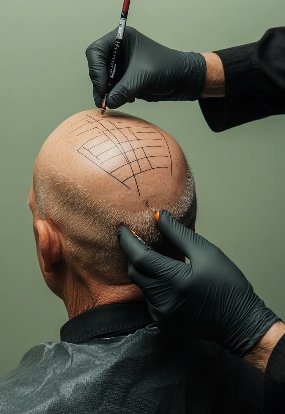
Many men experience hair loss at some point in their lives, and this condition worsens with age. By their late twenties, approximately 20% of men face genetic (androgenetic alopecia) hair loss. Here, the word "andro" emphasizes androgenic hormones (testosterone and dihydrotestosterone), which are responsible for male pattern baldness. The genetic component refers to baldness genes inherited from either the mother or the father. Contrary to popular belief, baldness genes are not only inherited from the mother; they can also be inherited from the father.

Online Consultation
This is performed by our plastic surgeon.
Analysis & Planning
A personalized treatment plan is created in collaboration with our doctor.
Suitability
Our doctor will assess your suitability for the procedure.
Op. Dr. İlhan Serdaroğlu
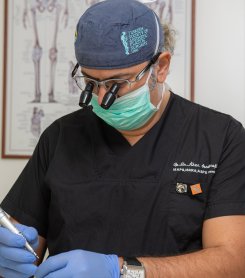
I have been serving patients for over 25 years.
I graduated with honors from Marmara University Faculty of Medicine and completed my specialization in Plastic and Reconstructive Surgery at Akdeniz University. I believe that surgical experience, the selection of the right technique, and personalized planning are crucial in hair restoration. A natural, anatomically appropriate hairline design and a tissue-respecting surgical approach that reduces the risk of complications are essential in hair transplantation. While aiming to reduce the psychological effects of hair loss in both men and women, I also strive to apply medical and scientific supportive treatments and share my experiences globally.
HAIR TRANSFORMATION STARTS HERE.
You can plan your hair transplant process specifically for you by having an online consultation with Op. Dr. İlhan Serdaroğlu.
Contact us via WhatsApp, form, or phone.
Our expert team will provide preliminary information and schedule your appointment.
Plan your hair transplant with Op. Dr. İlhan Serdaroğlu.
OUR TREATMENT PROCESSES
Our patient processes at our clinic

Let us Call You
In men in their 30s, the rate of hair loss is around 30%; in their 40s, it's 40%; and in their 50s, the rate of genetic hair loss is around 50%. Hair loss in men begins during puberty with the rise in testosterone levels and continues if there is a genetic predisposition. In white men, 96% may experience receding hairline and thinning at the temples after puberty. Generally, it's not possible to precisely determine the type, onset time, and severity of hair loss. However, hair loss that starts very early, in the 20s, is usually more severe and causes more thinning. In some men, hair loss may occur later, after the ages of 30 and 40.
Contrary to popular belief, in people experiencing baldness, testosterone levels are not excessively high, but within normal limits. The important point is whether or not a baldness gene is present in a person. While hair in the armpits and genitals requires testosterone to grow; Hair follicles are affected by dihydrotestosterone. This dihydrotestosterone effect halts the growth phase (anagen phase) of hair follicles, causing them to shorten and gradually weaken, becoming miniaturized. Under the influence of the hormone, the hair enters the telogen phase, which we call the resting phase. Daily activities like brushing and combing cause more hair to fall out, accelerating the rate of hair loss. As hair growth decreases and thickness diminishes over time, pigment production also decreases, and the hair color lightens. As a result of this process, the hair that begins to fall out transforms into fine, shiny, and colorless downy hairs, eventually disappearing completely. A diagram illustrating miniaturization is shown below.
The psychological impact of hair loss differs among men. While some individuals don't consider hair loss significant, for others, even the slightest thinning or loss of a single strand of hair can cause significant difficulties in their professional and social lives, making life unbearable. These individuals require professional psychological support and medical treatment. Today, medical treatments with medications can prevent hair loss at an early age and sometimes even delay it; however, in cases of hair loss occurring in later life, hair transplantation is necessary to replace the lost hair.
In the last 10 years, hair treatments have developed dramatically, particularly with the use of finasteride (a drug that prevents the formation of dihydrotestosterone from testosterone) in hair loss and the development of effective hair transplantation methods. In the coming decades, it is planned to clone a person's own hair and perform hair transplantation using these clones. Although there are very promising scientific studies on this subject, it has not yet reached the desired level and clinical applications have not been implemented.
The miniaturization of hair follicles due to the effect of dihydrotestosterone in hair loss:
