How successful is hair transplantation in women?
Hair loss in women can occur due to genetic predisposition, age, and various health problems. In suitable candidates who do not benefit sufficiently from medical treatments, hair transplantation can offer successful and lasting results. A detailed examination before the operation, evaluation of family history, and determination of donor area adequacy are of great importance. Surgical restoration is particularly effective in women with preserved donor areas, while hair transplantation can be performed using the DHI technique in cases of diffuse hair loss. Correct patient selection and an experienced surgical approach form the basis of natural and satisfactory hair transplant results in women.
Online Consultation
This is performed by our plastic surgeon.
Analysis & Planning
A personalized treatment plan is created in collaboration with our doctor.
Suitability
Our doctor will assess your suitability for the procedure.
Op. Dr. İlhan Serdaroğlu
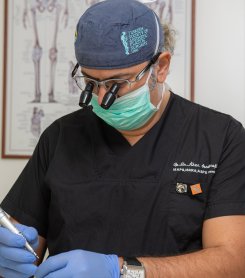
I have been serving patients for over 25 years.
I graduated with honors from Marmara University Faculty of Medicine and completed my specialization in Plastic and Reconstructive Surgery at Akdeniz University. I believe that surgical experience, the selection of the right technique, and personalized planning are crucial in hair restoration. A natural, anatomically appropriate hairline design and a tissue-respecting surgical approach that reduces the risk of complications are essential in hair transplantation. While aiming to reduce the psychological effects of hair loss in both men and women, I also strive to apply medical and scientific supportive treatments and share my experiences globally.
HAIR TRANSFORMATION STARTS HERE.
You can plan your hair transplant process specifically for you by having an online consultation with Op. Dr. İlhan Serdaroğlu.
Contact us via WhatsApp, form, or phone.
Our expert team will provide preliminary information and schedule your appointment.
Plan your hair transplant with Op. Dr. İlhan Serdaroğlu.
OUR TREATMENT PROCESSES
Our patient processes at our clinic

Let us Call You
Since 2004, the percentage of women undergoing hair transplantation has increased by 24%, reaching 14.2% worldwide. Hair transplantation can yield good results in women who have not been able to resolve their hair loss problems with medical treatment. However, a thorough examination is necessary beforehand to determine suitability, whether there are underlying medical conditions, and whether sufficient donor areas are available. Hair transplantation may not be suitable, or even should not be performed, in some cases of skin diseases.
A detailed family history is crucial: It's important to know which women in the family experienced thinning and hair loss, when, what type of hair loss occurred, and how much hair was lost. After diagnosing hereditary causes of hair loss (e.g., female pattern baldness/alopecia), the appropriate treatments should be discussed.
For optimal results in hair transplantation for women, surgical skill and experience, a thorough examination, and diagnosis are essential. It's difficult to say that all women are suitable candidates for hair transplantation. Situations that rule out hair transplantation as a treatment option for women include: cases where hair loss is widespread throughout the scalp and insufficient donor hair follicles are available for transplantation; and cases where patient expectations are high and the woman desires 100% restoration to her pre-hair thinning hair level. Hair transplantation should not be performed in such cases.
"Patterned" hair loss in women, similar to men, is hair loss where thinning occurs in the front and crown areas, and is rare. That is, hair loss and thinning are not widespread; they occur in certain areas, not throughout the scalp. In these cases, hair loss or thinning is usually not observed in the nape and flanks, and the hair is thick and healthy. This provides the surgeon with a healthy donor area from which hair follicles can be harvested, as in men. This type of female hair loss is excellent for hair transplantation and hair restoration surgery. "Diffuse" hair loss is a type of hair loss where hair loss occurs everywhere, and thinning and shedding are widespread in women. In this situation, hair transplantation cannot be performed because healthy hair follicles without thinning will not be available for transplantation.